Eucatastrophe
The Stack-State: Hope or Despair?
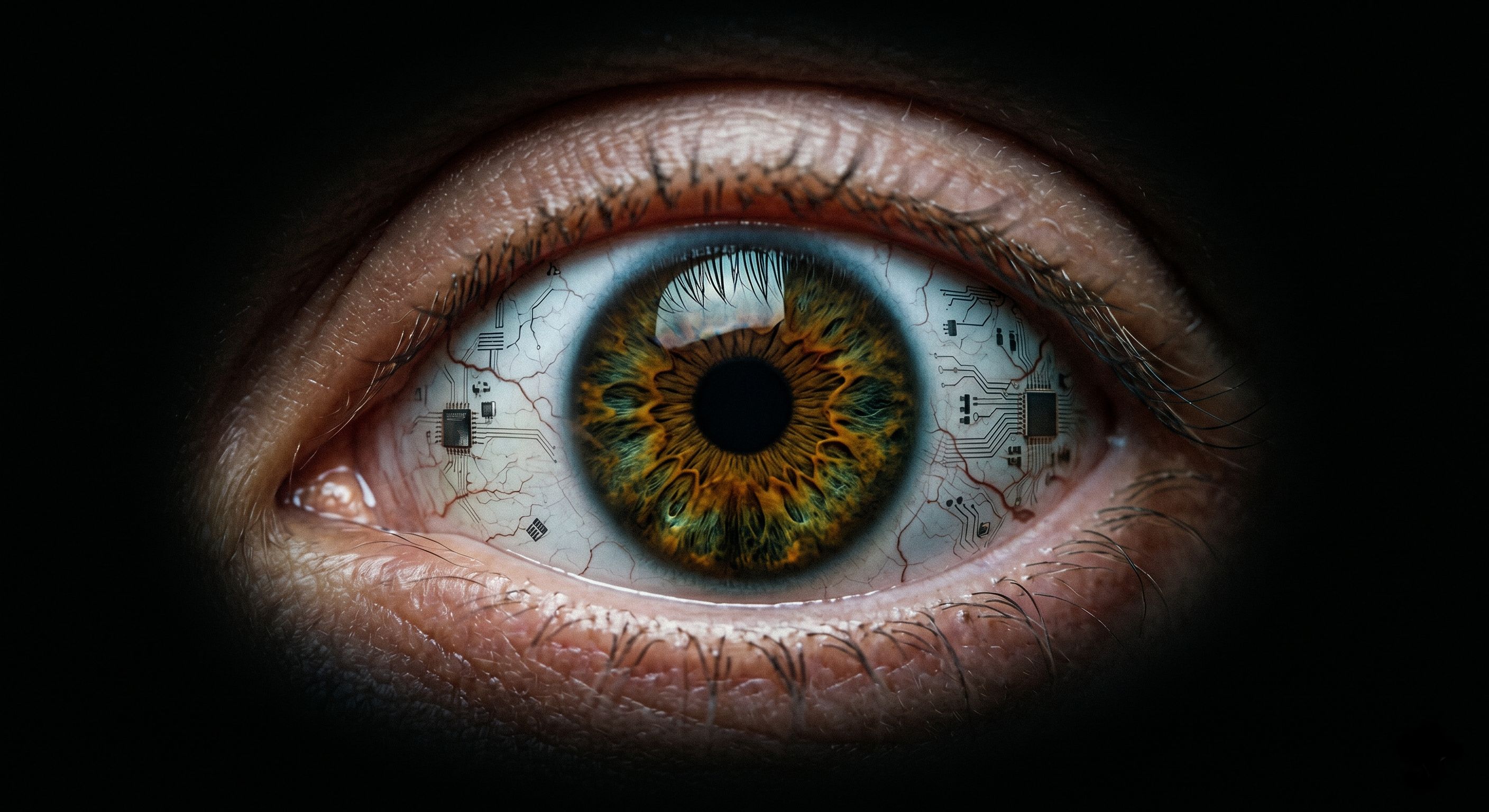
The palantír seeing-stones never lied. They showed Denethor real ships, real banners, the real shadow gathering in the east, and broke his mind with the truth. The most ambitious surveillance company of our age took that name for itself, and I have to admit I missed the real meaning of that for years.
Yesterday I came across this piece by Teodor Mitew on Substack.
Everything Is Computer
On Palantir's Manifesto and the Recompiling of the State
substack.com
Mitew reads Palantir’s recent manifesto as the opening statement of what he calls the Stack-State. By this he means a form of governance that drops the therapeutic facade of the bureaucratic state and runs sovereignty directly off software, AI, and raw computational efficiency. Citizens become a “service substrate.” Politics-as-identity dies. Drone warfare decentralises precision violence to terrifying ends. It is a bleak essay, and most readers will close the tab feeling something close to despair.
I think Mitew is mostly right. But the metaphor he leans on contains a counterweight he never quite turns over, and it goes deeper than political resistance. It goes to the question of what kind of universe we think we are living in.
As a child I was completely obsessed with Tolkien. I spent more time wandering Middle-earth in my imagination than most kids back in those days of the early ’80s. The films broke the spell for a while, but it has been long enough now that the books have come back to me, and with them an instinct that the name Palantir is not just borrowed branding. It is a confession.
Sauron never showed Denethor false visions. He showed him the real, again and again, until his mind broke. Total transparency as a total weapon.
This is the part the company’s founders either understand and dismiss, or do not understand at all. In Tolkien’s lore every significant palantír user ends in a failure of perception. Saruman saw too much and understood none of it. Denethor saw accurately and despaired. The instrument of far-sight, used without wisdom, produces the most catastrophic myopia. Pure data, with no judgement around it, is not clarity. It is a kind of madness.
The counterweight I think Mitew misses is the one only a Tolkien reader can really make, and it is where the title of this post comes from. The downfall of the hyper-rational, data-driven villain in The Lord of the Rings is not a stronger army or a better weapon. It is what Tolkien names a eucatastrophe, a sudden, unearned turn born from what Gandalf calls a fool’s hope. Two hobbits walking the wrong way into Mordor. A pity that stays Bilbo’s hand decades before it matters. Acts the machine cannot price, because they are not optimising anything.
A system that runs on patterns, optimisation, and predictable self-interest cannot compute radical kindness, self-sacrifice, or the small acts of local resilience that hold a community together when the lights go out. Not because it is stupid. Because those things are not legible as inputs. They happen in the unmonitored spaces.
But it is worth saying what Tolkien actually meant by eucatastrophe, because he meant more than a good plot twist. In his essay On Fairy-Stories he defined it as the sudden turn in a tale that gives the reader, for a moment, a glimpse of “Joy beyond the walls of the world.” Not optimism. Not a happy ending. A glimpse, through the story, of something the story cannot contain. The eucatastrophe matters to him because it is evidence, however brief, that the world is open at the top. That there is something outside the system.
This is what makes Palantir’s worldview not only a political claim but a metaphysical one. The Stack-State, in its purest form, says the universe is fully legible. Everything that exists is data, and everything that is data can in principle be modelled, predicted, and steered. There is nothing beyond the walls. The fool’s hope, on this account, is not merely naive. It is a category error, because there is nothing outside the system for it to bet on.
Tolkien knew this position intimately and hated it. He had a word for it. The Machine. He used it in his letters to his son Christopher during the war, and not just for technology, but for any project that tried to bend the world to a single will through sheer leverage. His objection was not nostalgic. It was theological. He believed, as a Catholic and as a writer, that humans were made for subcreation. That our stories at their best are small participations in a larger making, and that the fairy-tale’s sudden turn carries a rumour of that larger making back into the world. To name your company after the palantíri, and not feel that ground under you, is to declare which side of the metaphysical question you have come down on, even if you haven’t noticed you have answered it.
I share that faith, and the longer I watch the Stack-State assemble itself the more I think Tolkien was right about its consequences as well. I like to think that we live in a universe that is infused with a deep magic and mystery that the machine cannot read. Palantir and its kin are the villains in such a story, and in Tolkien the villains are eventually defeated. Not because they are out-fought, but because the world has a grain they have set themselves against, and that grain runs deeper than any data.
This is not a counsel of despair. The small unmonitored kindness, the fool’s hope, the sudden good turn, all of them point at something the machine cannot reach. Remain stubbornly human in the places it isn’t looking.